 邁向五十週年TOWARD FIFTY

Spread-tow carbon fabric: flatten the fiber, and the fabric gets thinner and flatter.
IntenLight™ is TEi's own brand of spread-tow carbon fabric. Each carbon tow is spread into a wide, flat, thin tape before it reaches the loom; weave, areal weight and width are customized to your part.
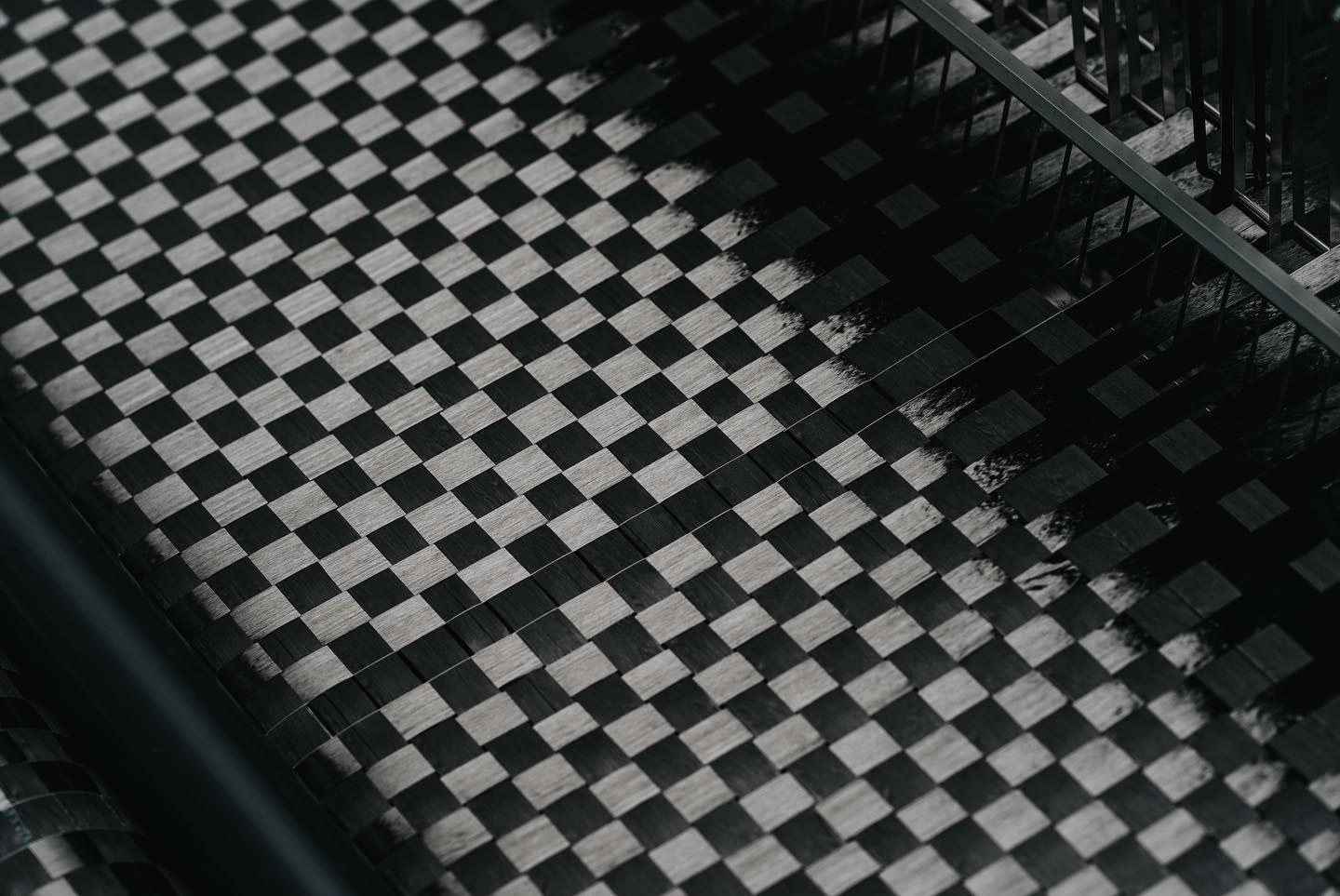
The difference starts before the loom.
Conventional carbon fabric is woven from round, thick tows, so the yarns undulate strongly where they cross (crimp) and the cloth is thicker. IntenLight spreads each tow into a flat, wide tape before weaving: lower crimp, thinner plies, a flatter surface.
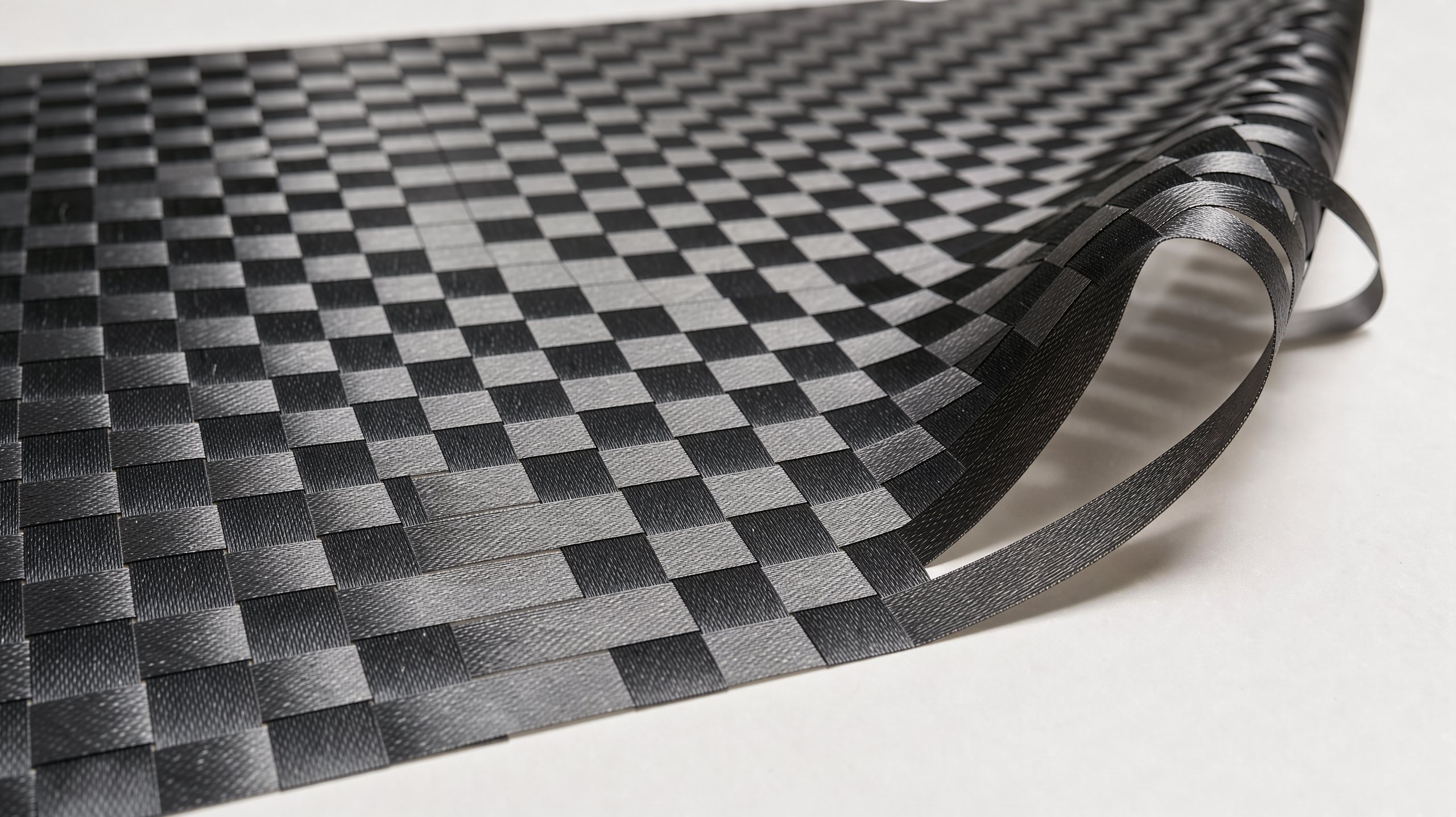
Lower crimp
Fibers bend less where warp and weft cross, so load runs closer to the fiber axis and less in-plane stiffness and strength is lost to undulation.
Thinner plies
More plies fit within the same total thickness, giving more ply-angle combinations and a laminate closer to the fiber directions and thickness distribution the design calls for.
Flatter face
Wide tapes form large, smooth squares with almost no gaps between them, so cosmetic parts need less filling and sanding before coating.
Even wet-out
Spread fiber lies evenly, resin follows consistent flow paths, and local resin-rich zones or dry spots are less likely.
Actual thickness and performance depend on weave, resin and molding method, and are confirmed by testing.
It starts with electrostatic spreading.
The first step of IntenLight is electrostatic dispersion spreading: incoming carbon tow is separated filament by filament and flattened evenly into a wide, thin tape, then sent to the loom. TEi does not produce carbon fiber; from the spreading step on, we decide how the fiber lies.
Spreading technology and 3D simulation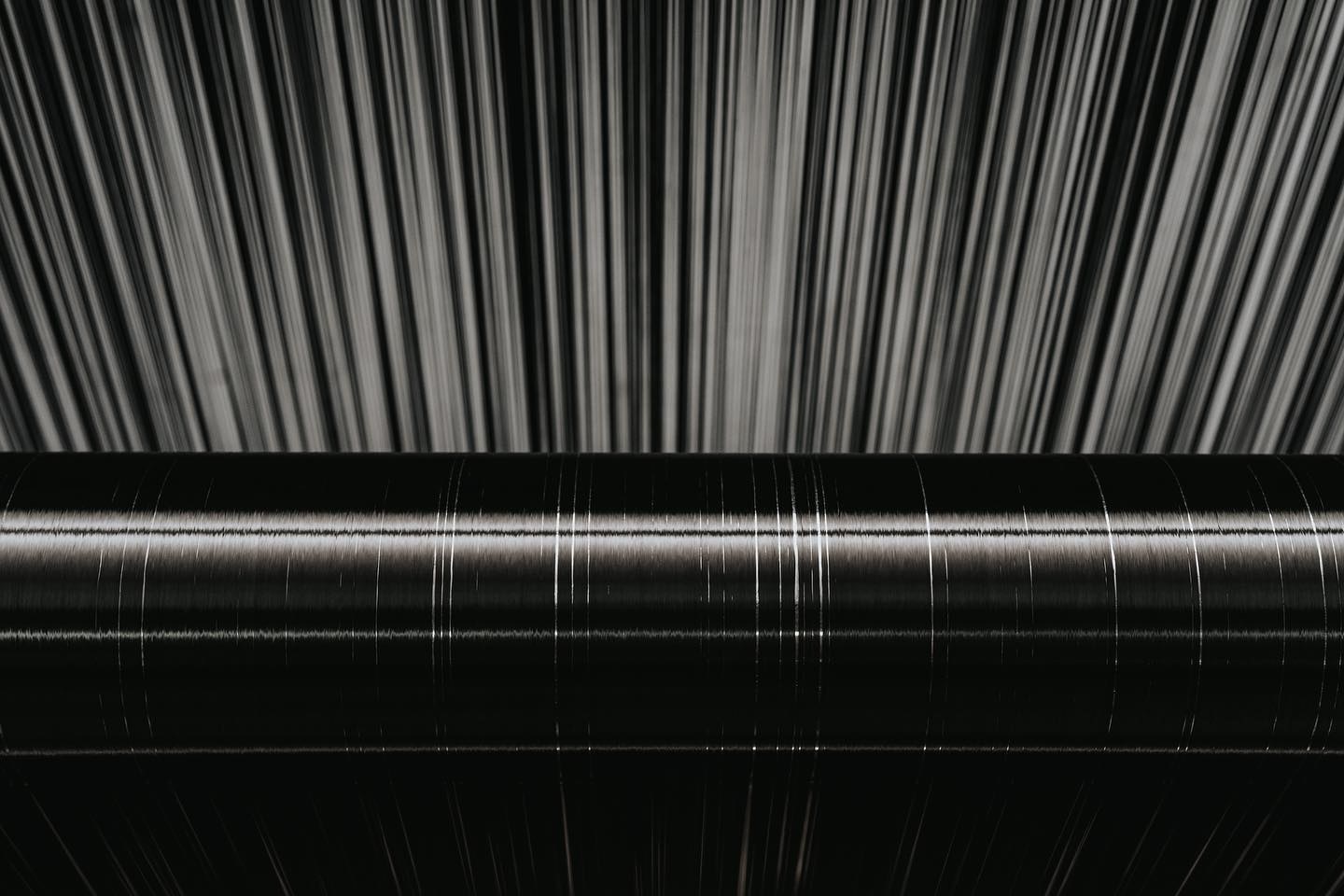
What you can order
Fabric, tape or molded parts, through one point of contact.
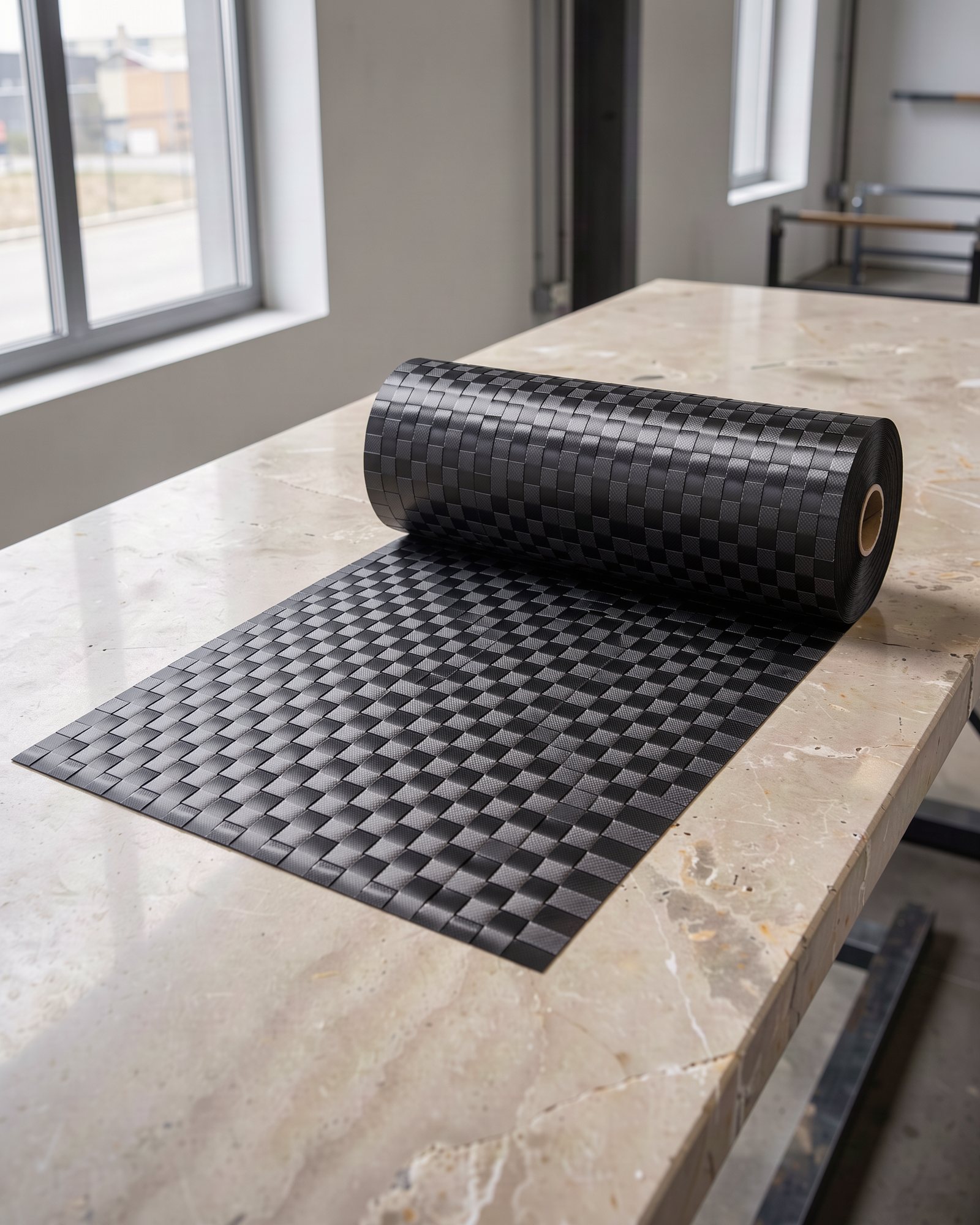
Weave, areal weight and width customized to your part. Most parts designed with standard twill carbon fabric can switch to spread-tow fabric; ply count and thickness are recalculated from the new ply thickness.
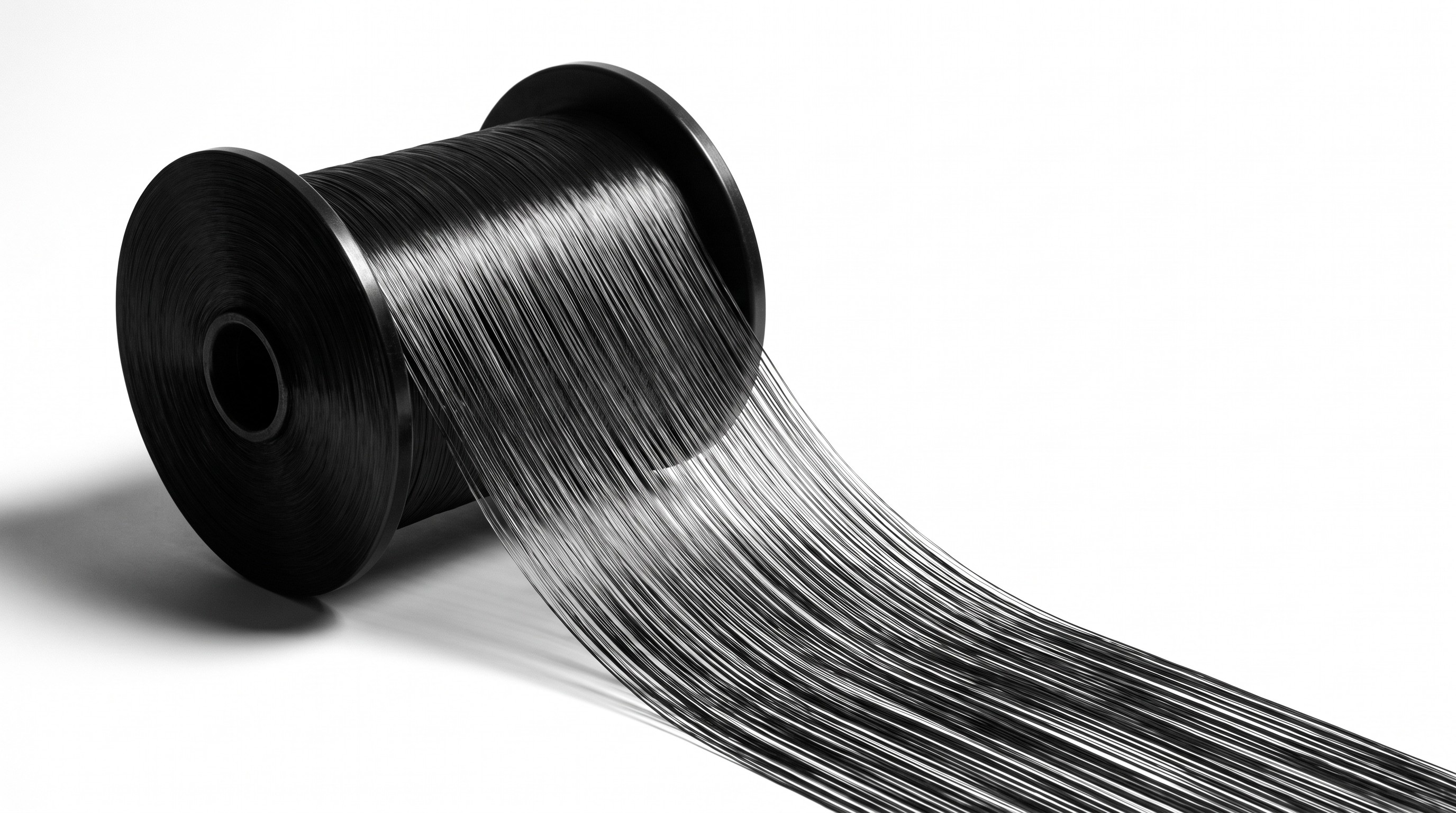
Flat, thin fiber tape that skips weaving and is laid up directly into thin-ply unidirectional laminates, with the angle of every ply specified independently.
When IntenLight needs to become a panel or shell, TEi molds it by compression molding or resin transfer molding, with material and molding under one roof.
Compression moldingResin transfer moldingSpecifications at a glance
| Weave, areal weight, width | Customized to your part |
|---|---|
| Supply forms | Spread-tow carbon fabric/Spread tow tape/Molded parts |
| Molding methods | Compression molding/Resin transfer molding |
| Brand integration | Dreamtex™ color/Jacquard pattern |
Standard codes
Representative codes available for supply. Other weaves, weights and widths are made to suit your part.
| Code | Fibre grade | Dry fabric weight (g/m²) | Weave | Width (mm) | — |
|---|---|---|---|---|---|
| TI-IL0606 | T300 / T700 · 6K | 130 | Plain / Twill | 1000 | Request this |
| TI-IL1208 | T700 · 12K | 200 | Plain / Twill | 1000 | Request this |
| TI-IL1215 | T700 · 12K | 102 (20) | Plain / Twill | 1000 | Request this |
| TI-IL1220 | T700 · 12K | 80 (12) | Plain / Twill | 1000 | Request this |
| TI-IL1225 | T700 · 12K | 64 (12) | Plain / Twill | 1270 | Request this |
| TI-IL1520 | TR50 · 15K | 100 (12) | Plain / Twill | 1000 | Request this |
| TI-IL2420 | T700 / TC36S · 24K | 160 (12) | Plain | 1000 | Request this |
| TI-IL2425 | T700 / TC36S · 24K | 128 (12) | Plain | 1270 | Request this |
| TI-ILM1220 | T800 · 12K | 46 (12) | Plain | 1000 | Request this |
| TI-ILM1820 | M30 · 18K | 76 (12) | Plain | 1000 | Request this |
| TI-ILM2420 | T800 · 24K | 100 (12) | Plain | 1000 | Request this |
| TI-ILM2420R | MR60 · 24K | 96 (12) | Plain | 1000 | Request this |
| TI-ILHM2420 | UMS40 · 24K | 80 (12) | Plain | 1000 | Request this |
Figures in brackets are binder weight.
Specifications are set per project: tell our sales team what the part does, its target thickness and its size.
Light weight, color and pattern,
woven into one fabric.
IntenLight can be combined with Dreamtex™ colored carbon and jacquard patterns in the same fabric, with no need to source and assemble them separately. It is integration between TEi's own brands, built for lightweight products that must be recognized on sight.
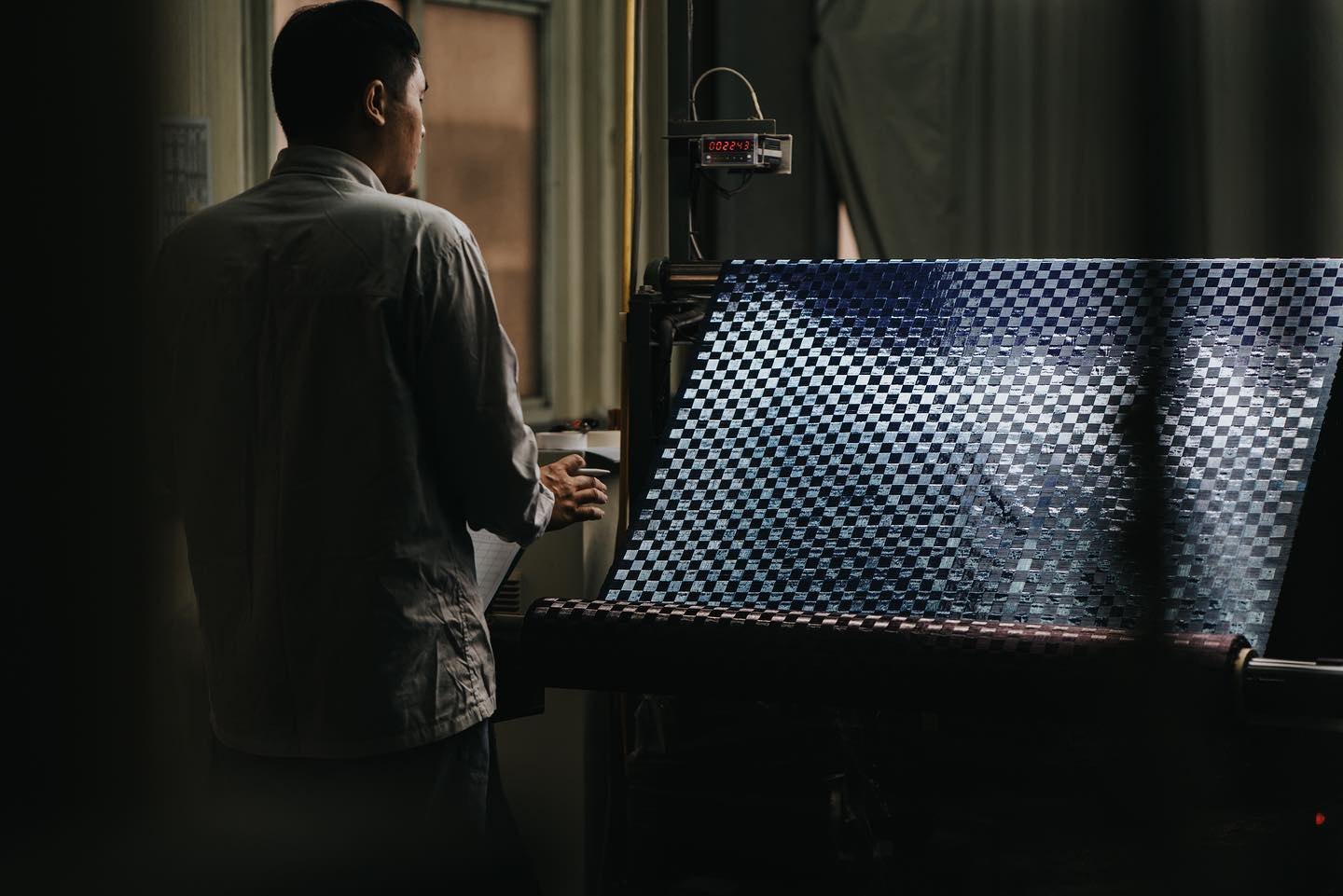 Dreamtex™ colorA specified color on spread-tow fabric: colored and carbon-black tapes interlace, and the carbon weave stays visible.Explore Dreamtex™ colored carbon fiber
Jacquard patternThe pattern is woven by the warp and weft themselves, not printed or filmed, and can be planned together with light weight and color.Explore jacquard carbon fabric
Where it fits
Products where weight and appearance are both specified.
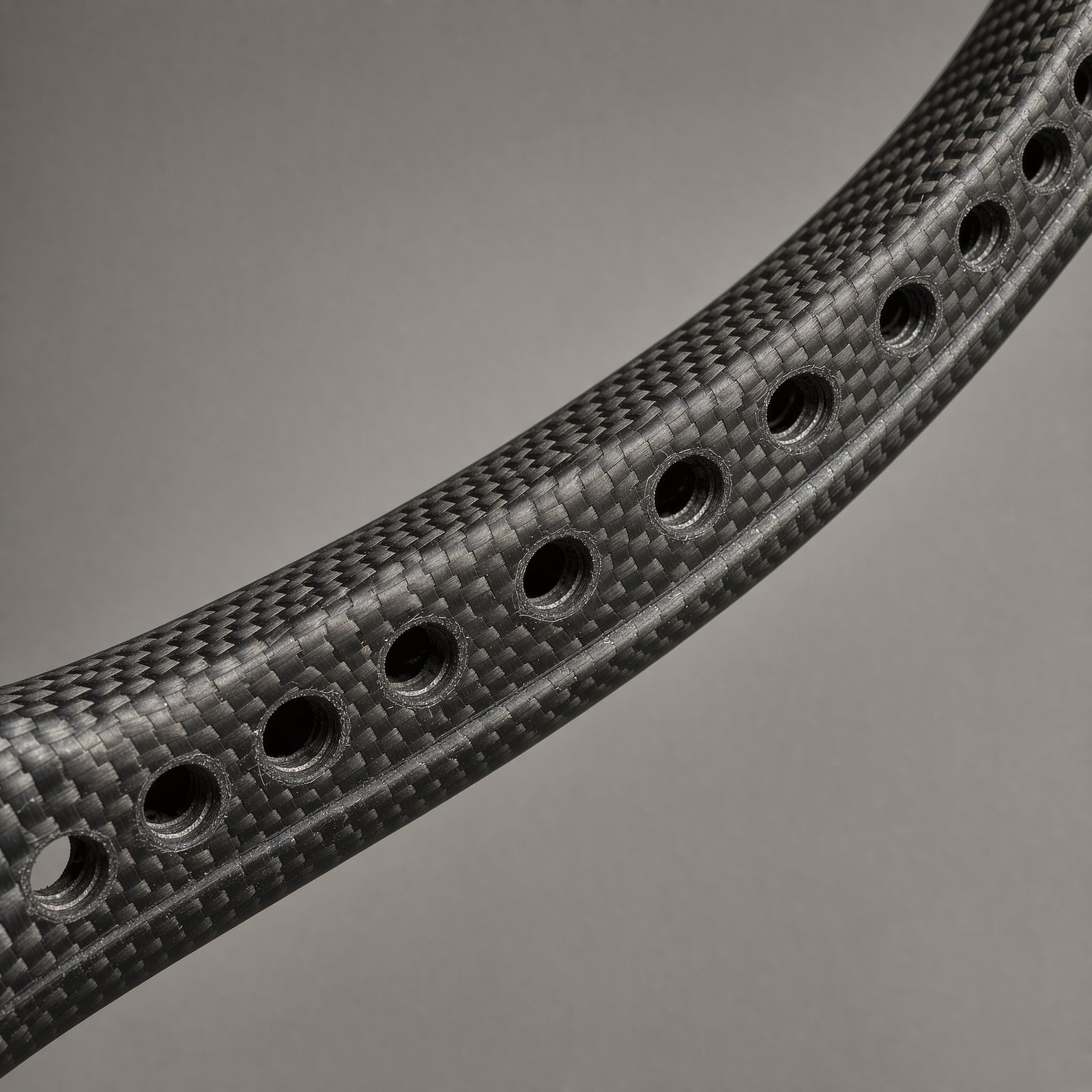 Sports equipment and guard outer pliesOuter plies of paddles, boards, frames and guards: less weight, with a flat carbon face.
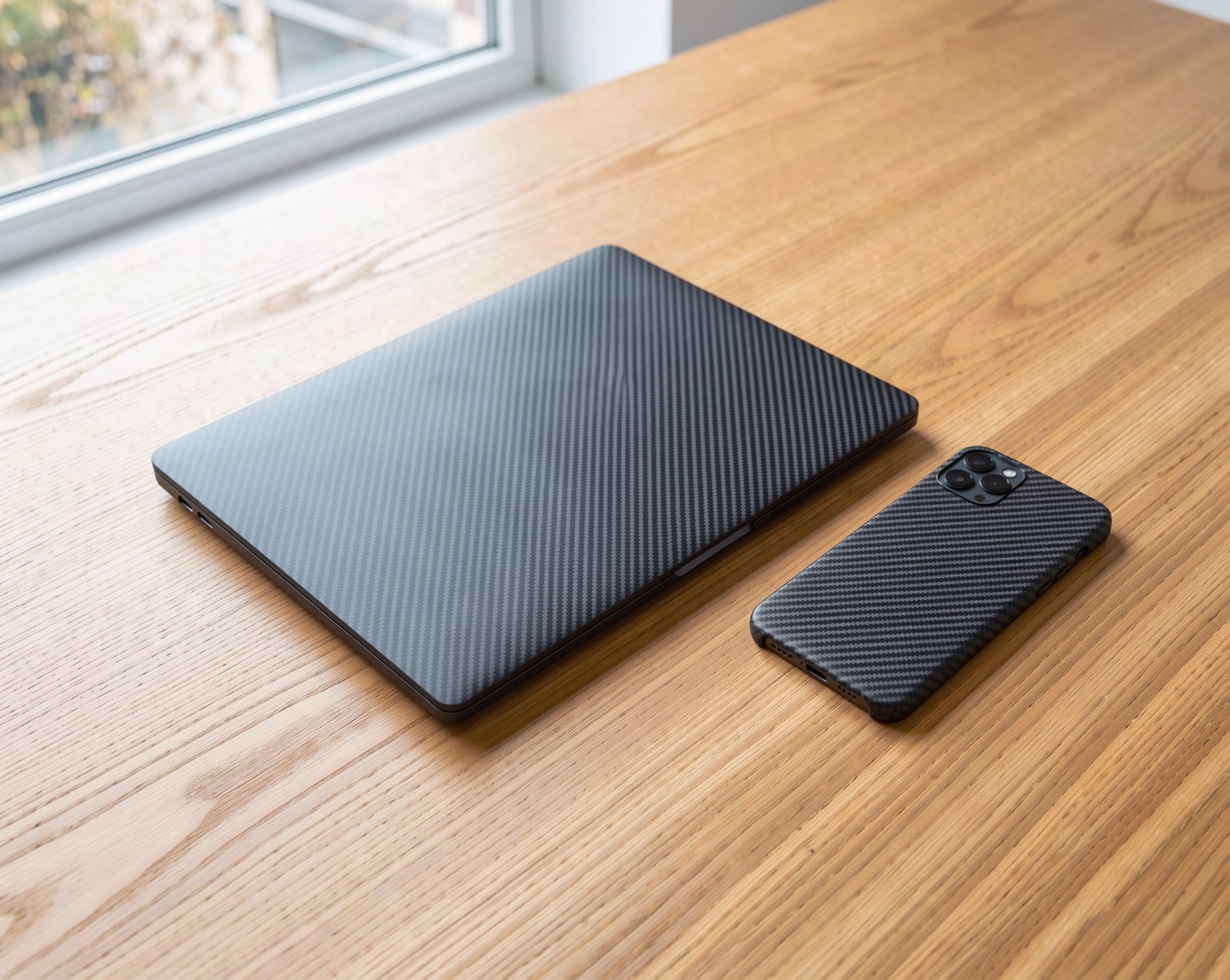 Lightweight cosmetic shellsVisible surfaces such as electronics housings and trim panels, thin and flat.
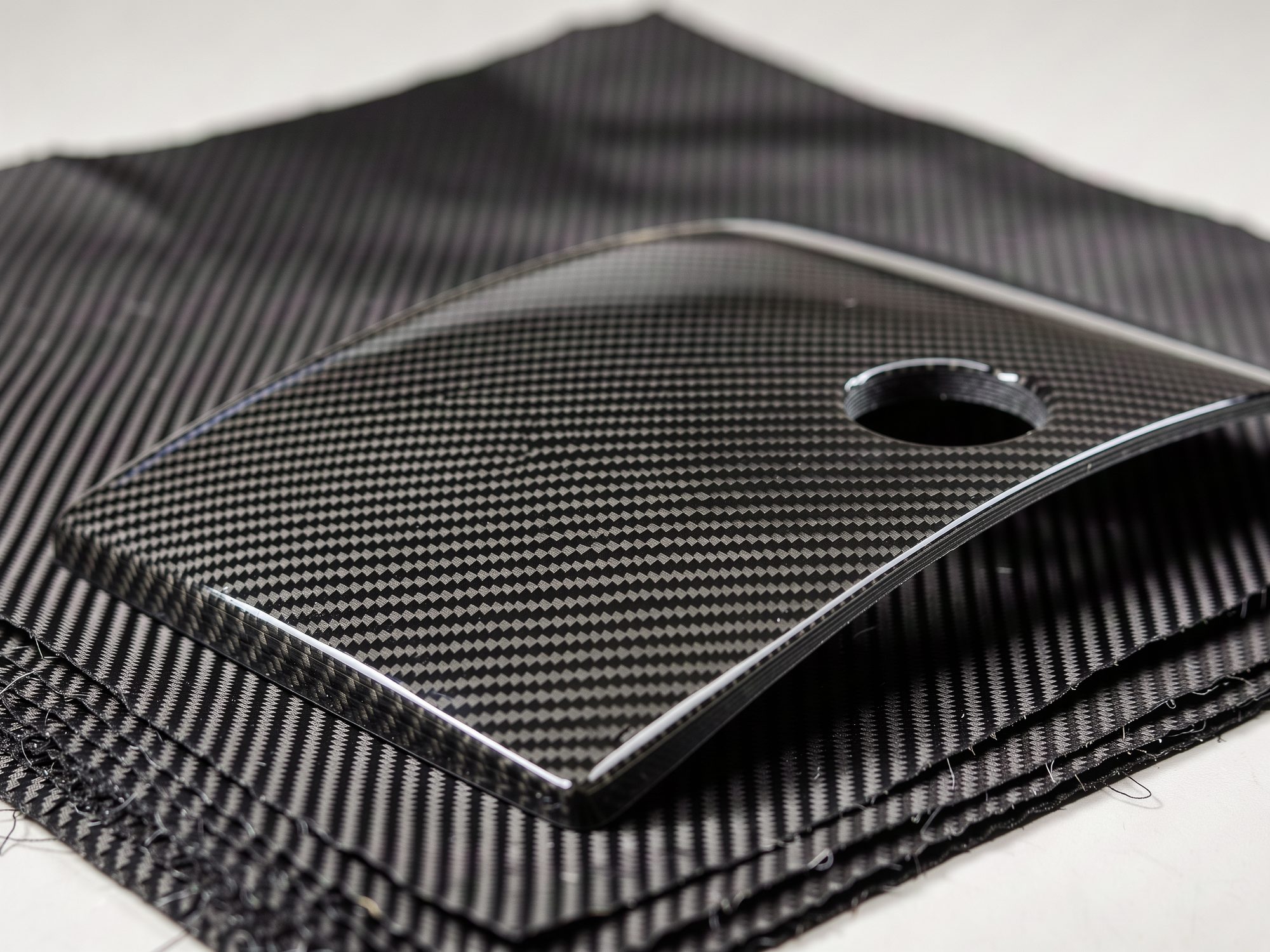 Thin multi-directional structuresLaminates that need several fiber directions within a limited thickness.
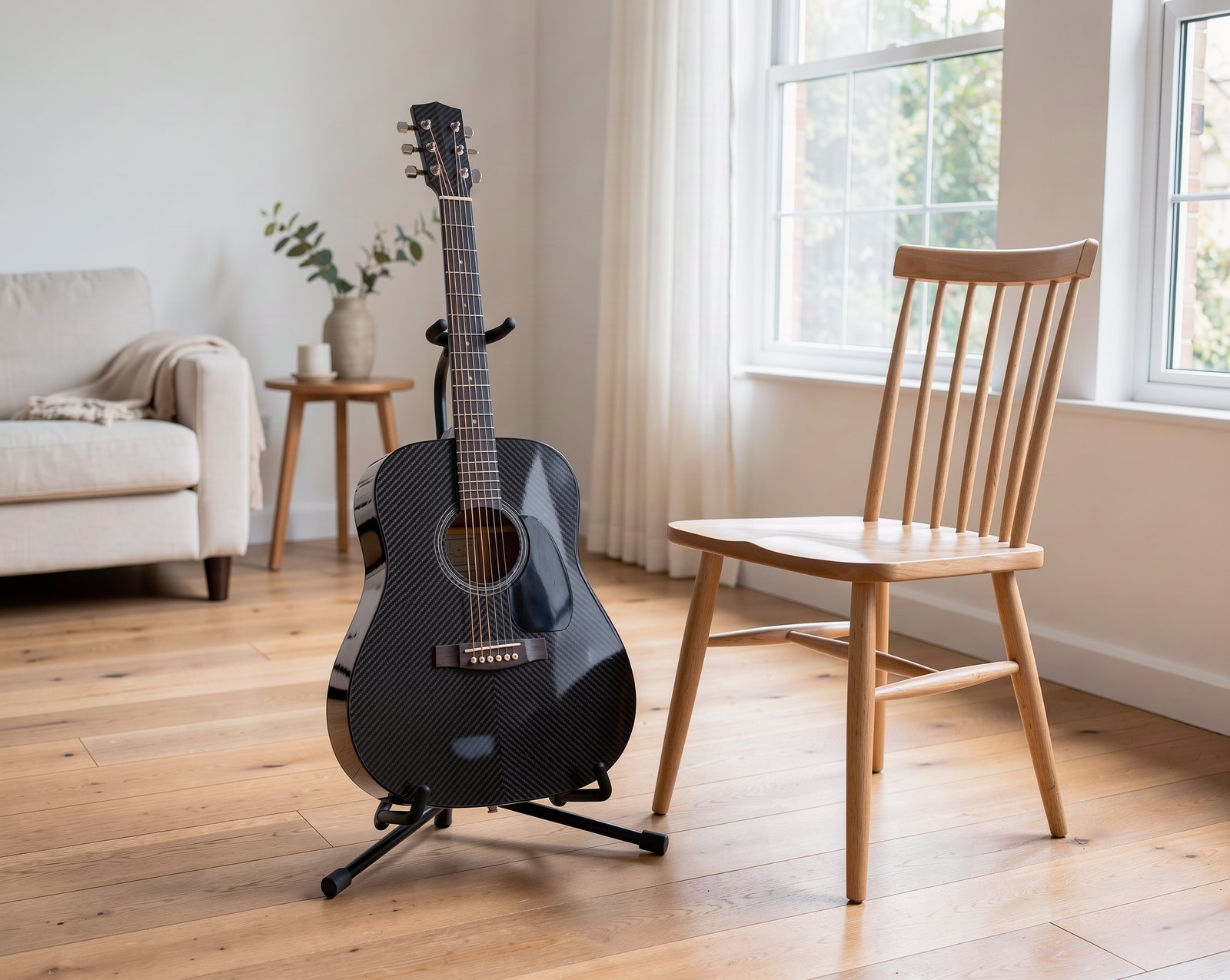 Refined design piecesDesigns that call for a large-square, low-undulation carbon weave.
Frequently asked questions
What is spread tow carbon fabric?
Spread tow carbon fabric is woven from carbon tows that are spread into flat, wide, thin tapes before weaving. Compared with conventional carbon fabric it has less crimp, thinner plies and a flatter surface. IntenLight™ is TEi's spread tow fabric brand; weave, areal weight and width are made to order.
How is spread tow fabric different from regular twill carbon fabric?
Regular fabric is woven from round, thick tows, so the fibers bend more where they cross and the fabric is thicker. Spread tow fabric crosses flat tapes, giving smaller undulation, thinner single plies and a large, flat check pattern. Most parts designed with twill can switch to spread tow, but ply count and thickness must be recalculated for the thinner ply.
Is spread tow fabric only about appearance?
No. Straighter fibers lose less in-plane stiffness and strength at the crossings, thinner plies allow more layup angles within the same thickness, and even fiber spacing gives more uniform resin wet-out. Actual thickness and performance depend on weave, resin and molding method, and should be confirmed by testing.
Can TEi supply spread tape or molded parts as well as fabric?
Yes. Besides IntenLight™ fabric, TEi supplies unwoven spread tow tape for thin-ply unidirectional layups, and molds panels and shells from IntenLight™ by compression molding or resin transfer molding. Send the part's use, target thickness and size to start a specification.
Compare fibers, weaves and processes in the composite selection guide →