 邁向五十週年TOWARD FIFTY
Selection guide · Materials and processes
Carbon fiber and composite materials: a selection guide
A neutral comparison of reinforcement fibers, weaves, tow sizes, fabric forms, resin systems and molding routes — the decisions every composite part starts with.
Property figures on this page are typical ranges from published literature, for general reference only. They are not TEi specifications; confirm design values with tested data.
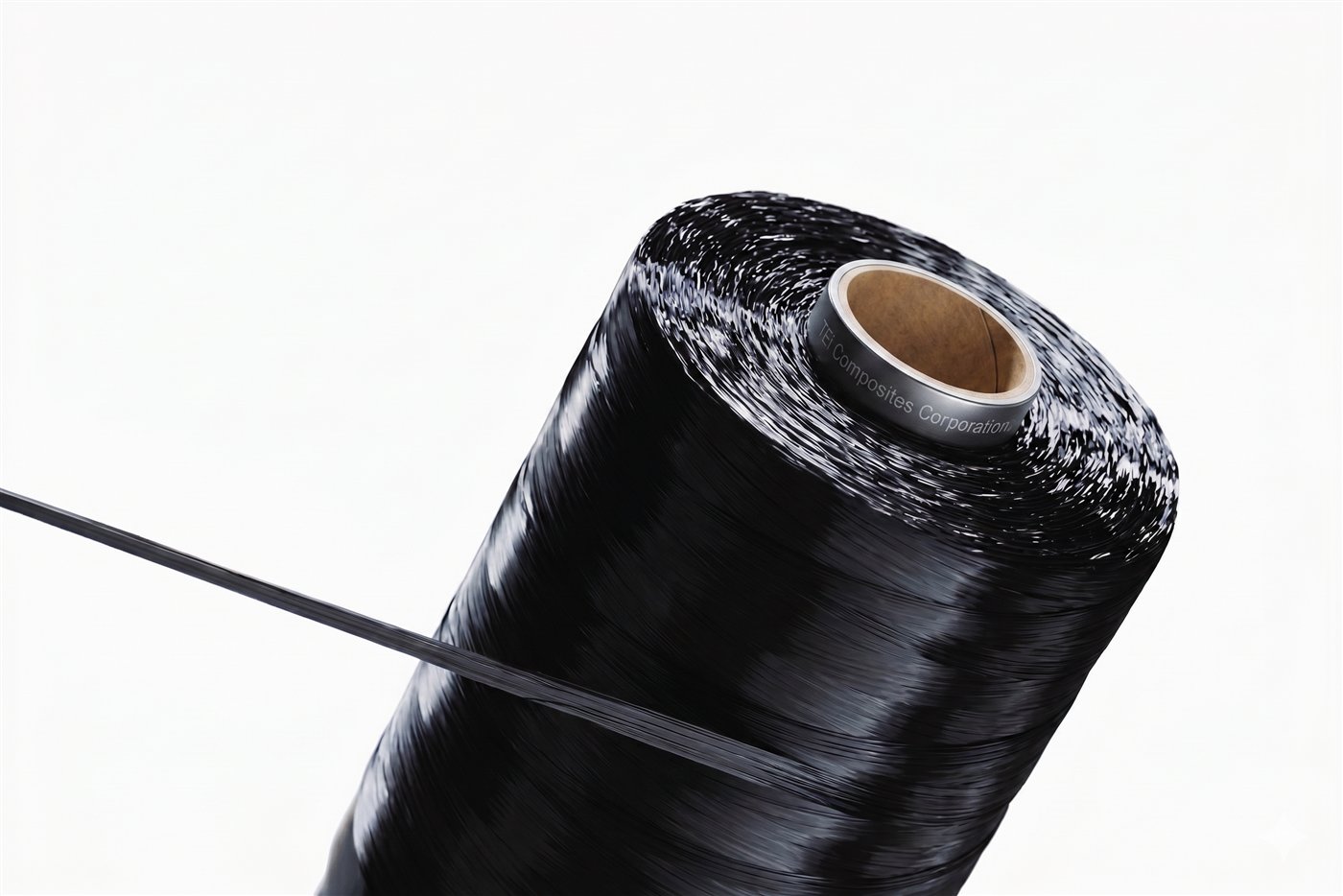
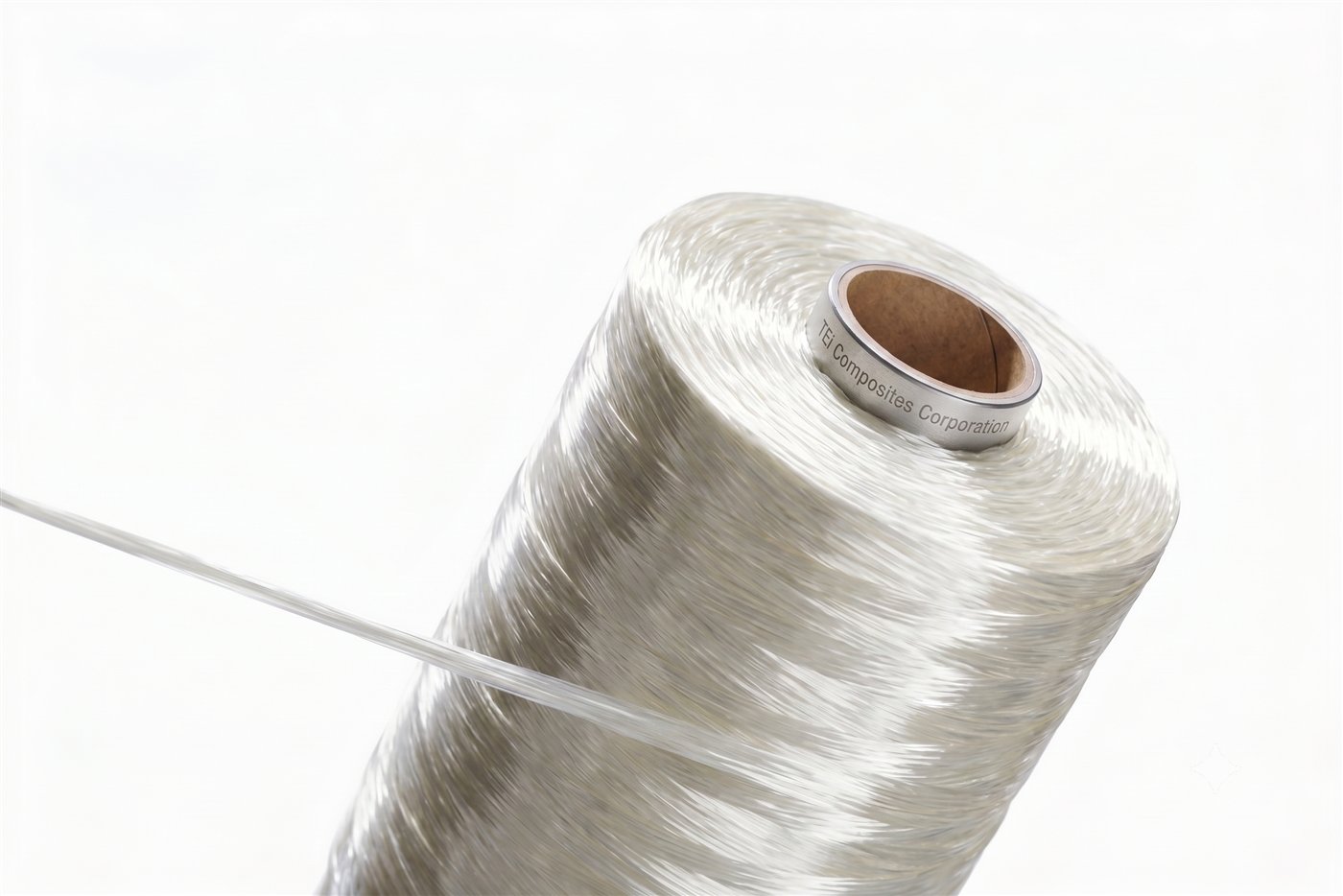
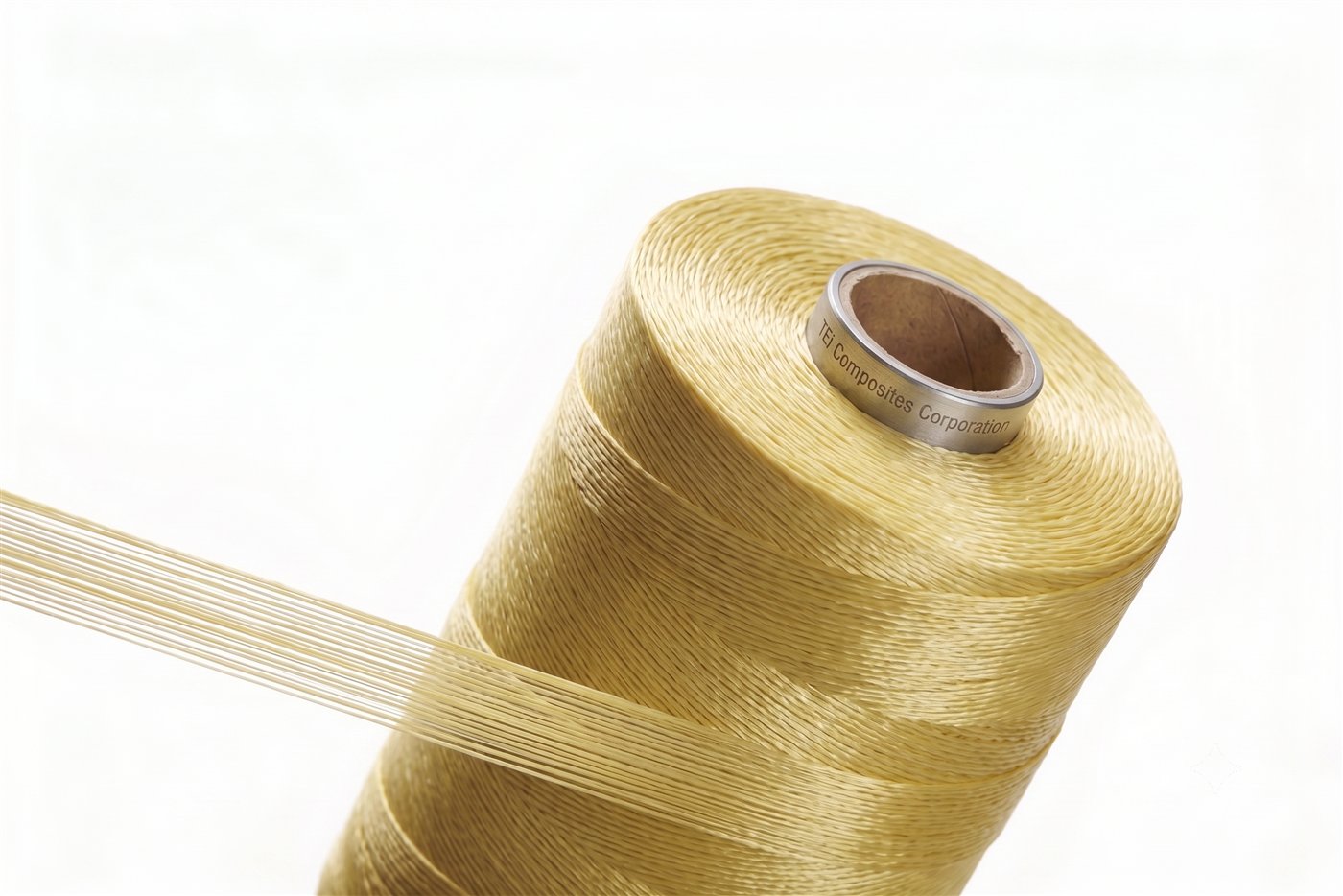
Carbon fiber vs glass fiber vs aramid
Carbon fiber is the stiffest and lightest of the three common reinforcement fibers, glass fiber is the most economical, and aramid is the toughest — the most impact- and cut-resistant.
Choose carbon when stiffness per weight drives the design, glass when cost, electrical insulation or radio transparency matter most, and aramid when the part must absorb impact or resist cutting. Carbon conducts electricity; glass and aramid insulate. Aramid is weak in compression and harder to cut, so it is often paired with carbon in hybrid fabrics.
| Property | E-glass fiber | Carbon fiber, standard modulus | Carbon fiber, intermediate modulus | Para-aramid fiber | Aluminum alloy (ref.) | Steel (ref.) |
|---|---|---|---|---|---|---|
| Density (g/cm³) | 2.5–2.6 | 1.75–1.80 | 1.78–1.82 | 1.44–1.45 | 2.7–2.8 | 7.8–7.9 |
| Tensile modulus (GPa) | 70–75 | 230–240 | 275–300 | 70–125 | 69–72 | 200–210 |
| Tensile strength (GPa) | 2.0–3.5 | 3.5–5.0 | 5.0–6.0 | 2.8–3.6 | 0.2–0.55 | 0.4–1.5 |
| Electrical behavior | Insulating | Conductive | Conductive | Insulating | Conductive | Conductive |
| Impact and cut resistance | Good | Low (brittle) | Low (brittle) | Excellent | — | — |
| Relative fiber cost | Low | High | Higher | High | — | — |
| Typical use | Cost-driven structures, insulation, construction | Lightweight stiff structures, sporting goods, cosmetic parts | Weight-critical high-performance structures | Protective gear, impact zones, hybrids | — | — |
Typical axial values of single fibers from published literature. Laminate values are lower and depend on fiber volume fraction and layup. General reference, not TEi specifications.
From TEi: carbon, glass and aramid are all woven in-house in Taiwan — carbon fiber fabric, fiberglass fabric, aramid fabric and hybrid woven fabric.
Plain vs twill vs satin vs unidirectional (UD)
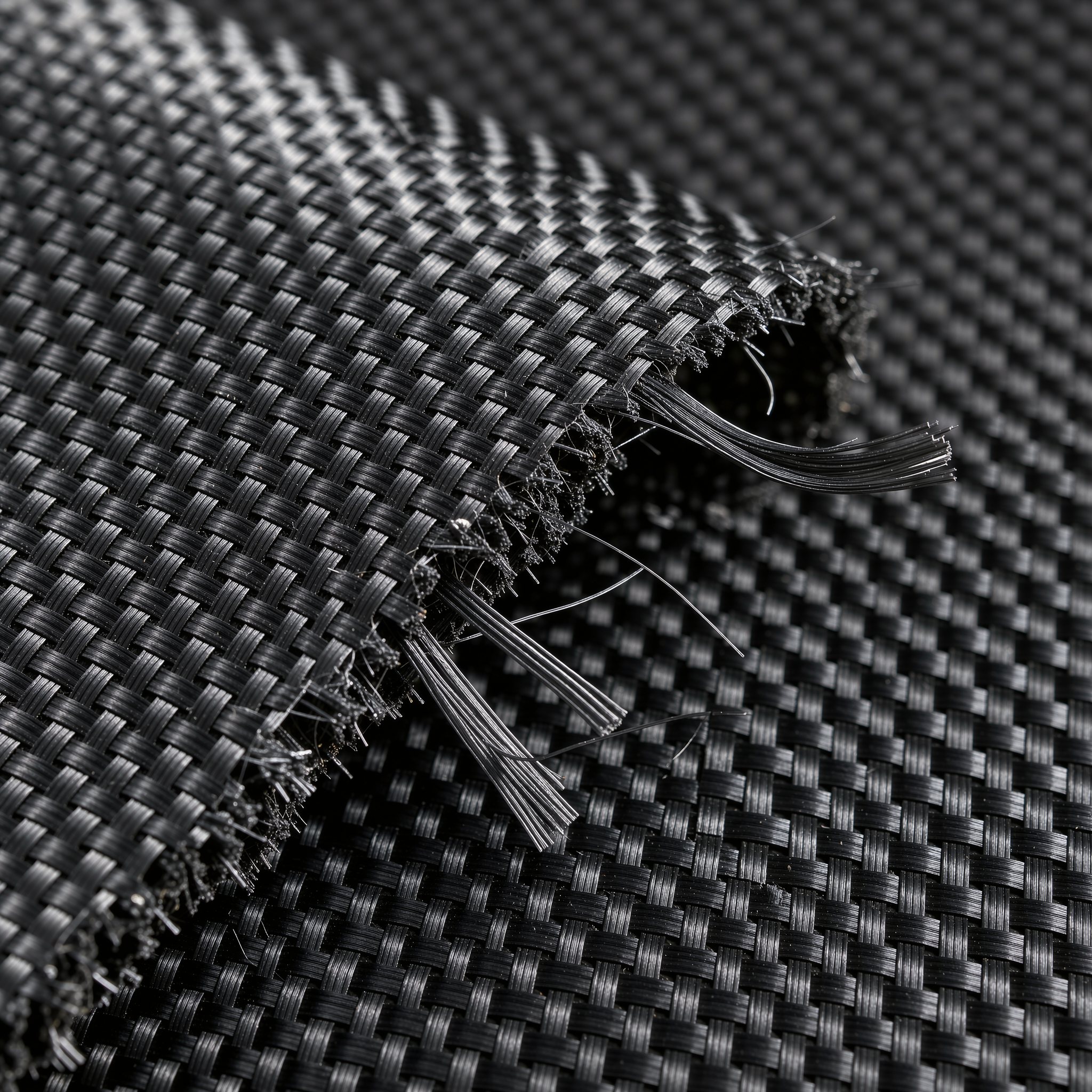
Plain weave is the most stable to handle, twill drapes better and gives the classic carbon look, satin drapes best over complex curves, and unidirectional (UD) puts every fiber in one direction for the highest stiffness along that axis.
The weave sets crimp — the waviness of fibers where they cross. Less crimp keeps fibers straighter and translates more of their properties into the part, but fewer crossings also make a dry fabric easier to distort. Multiaxial non-crimp fabrics (NCF) stitch straight UD layers together at set angles, combining low crimp with easier handling.
| Weave | Interlacing | Drape over curves | Handling stability | Crimp | Best for |
|---|---|---|---|---|---|
| Plain | 1 over, 1 under | Fair | Highest | Highest | Flat and gently curved panels |
| Twill (2×2) | 2 over, 2 under, diagonal | Good | Medium | Medium | Curved and visible-carbon parts |
| Satin (4H–8H) | 1 under every 4–8 yarns | Best | Lowest | Low | Complex double curvature |
| Unidirectional (UD) | None — parallel fibers | Along one direction | Low as dry fiber | None | Load-path plies, tubes, beams |
From TEi: plain, twill, satin and multi-axial carbon weaves on carbon fiber fabric; patterns woven into the structure on jacquard carbon fiber; 0°/±45° on triaxial braided fabric.
3K, 6K, 12K and 24K carbon tows
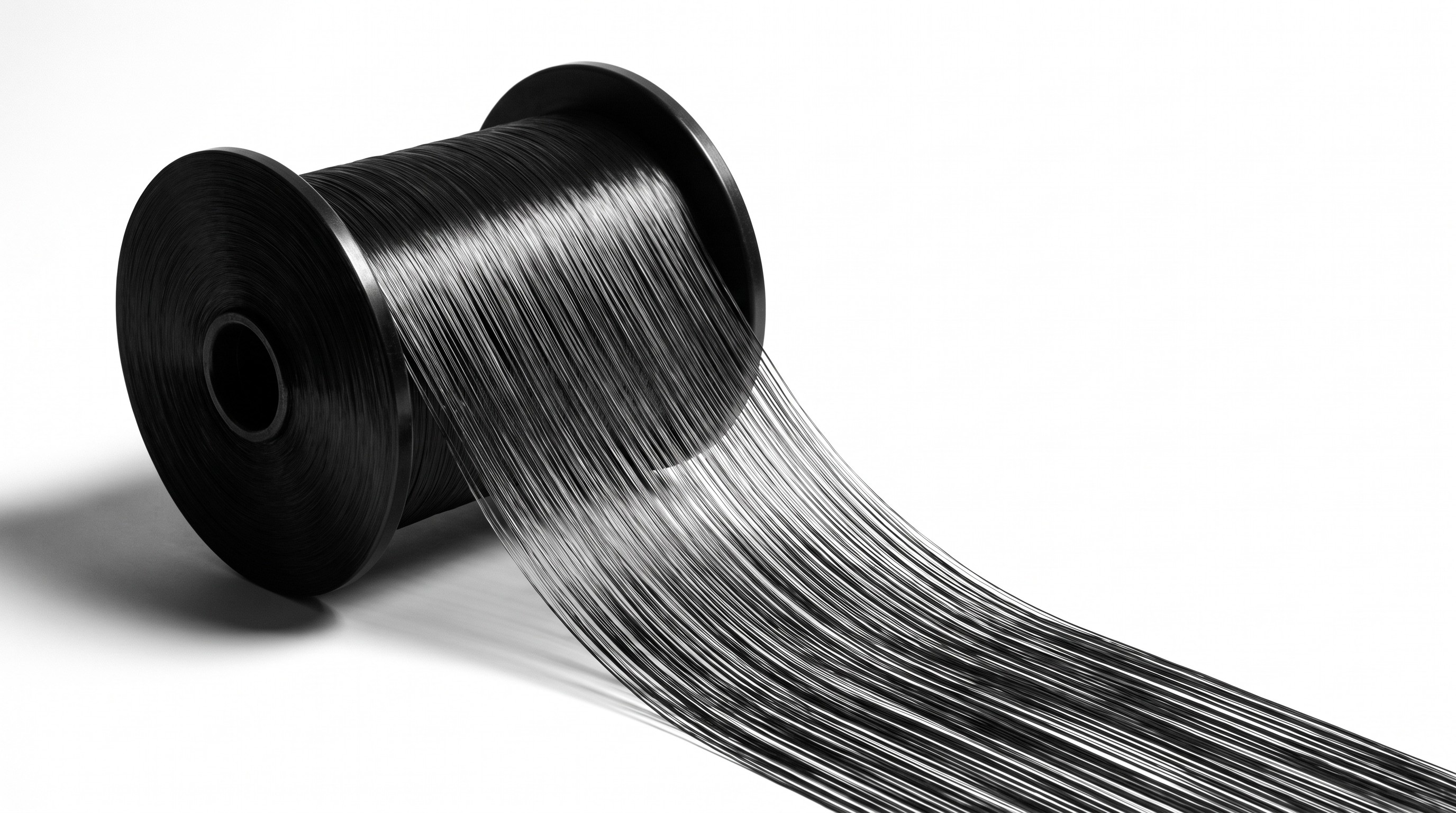
The K number is the number of filaments in a carbon tow, in thousands: a 3K tow has 3,000 filaments and a 12K tow has 12,000.
Smaller tows weave finer, lighter fabrics with a tighter look; larger tows build thickness faster at a lower cost per kilogram. Spread tow is the exception to the rule: a large tow spread flat before weaving can produce a light, thin fabric with a large, flat check pattern.
| Tow | Filaments | Typical woven areal weight | Look | Best for |
|---|---|---|---|---|
| 3K | 3,000 | About 160–245 g/m² | Fine, classic weave | Cosmetic and thin-wall parts |
| 6K | 6,000 | About 280–400 g/m² | Medium | Balance of look and build rate |
| 12K | 12,000 | About 400–650 g/m² | Larger weave | Structural plies, faster build-up |
| 24K | 24,000 | Heavy fabrics, UD and NCF | Large or hidden | Thick laminates, cost per kg, spread tape |
Typical ranges for common woven fabrics, for reference only. Actual areal weight depends on weave and thread count.
From TEi: carbon fiber fabrics from 3K to 24K on carbon fiber fabric; commingled yarn built on 3K and 12K carbon on Comtrix™.
Spread tow fabric vs conventional carbon fabric
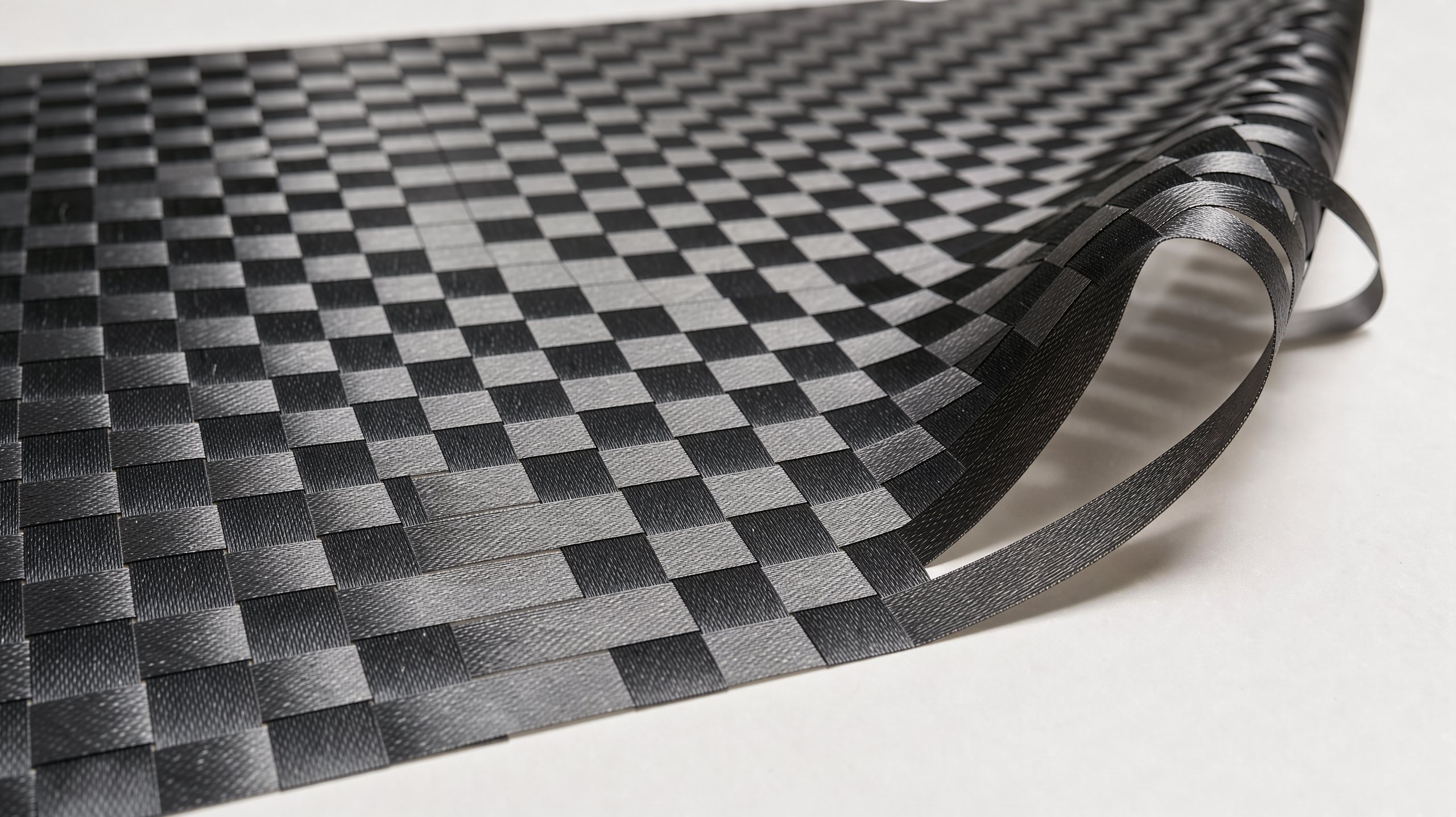
Spread tow fabric is woven from carbon tows flattened into thin, wide tapes before weaving; compared with a conventional fabric of the same fiber, it has less crimp, thinner plies and a flatter surface.
Thinner plies let designers stack more layers at more angles within the same thickness, and straighter fibers lose less in-plane stiffness at the crossings. Spread tow costs more to make, so it pays off in weight-critical, thin-wall and high-end cosmetic parts.
| Aspect | Conventional fabric | Spread tow fabric |
|---|---|---|
| Tow shape | Round or oval bundle | Flat, wide, thin tape |
| Crimp | Higher | Lower |
| Ply thickness | Thicker | Thinner (thin-ply possible) |
| Surface | Small checks, more undulation | Large flat checks, smoother |
| Resin distribution | More resin-rich pockets | More even |
| Relative cost | Lower | Higher |
From TEi: spread tow fabric under the IntenLight™ brand, made with TEi's own electrostatic fiber spreading.
Thermoset vs thermoplastic composites
A thermoset matrix cures by an irreversible chemical reaction and cannot be remelted; a thermoplastic matrix melts and solidifies, so the part can be re-formed, welded and recycled.
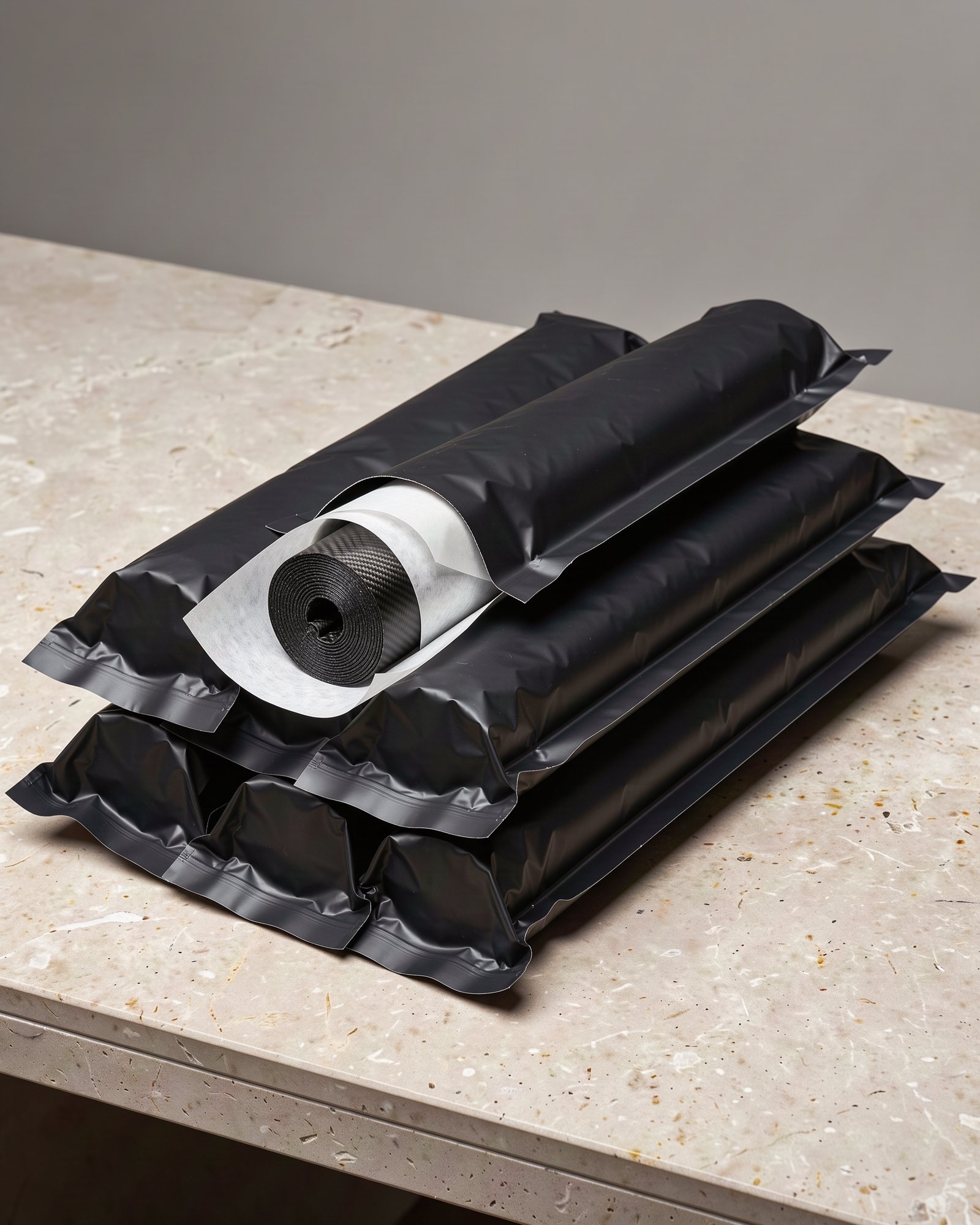
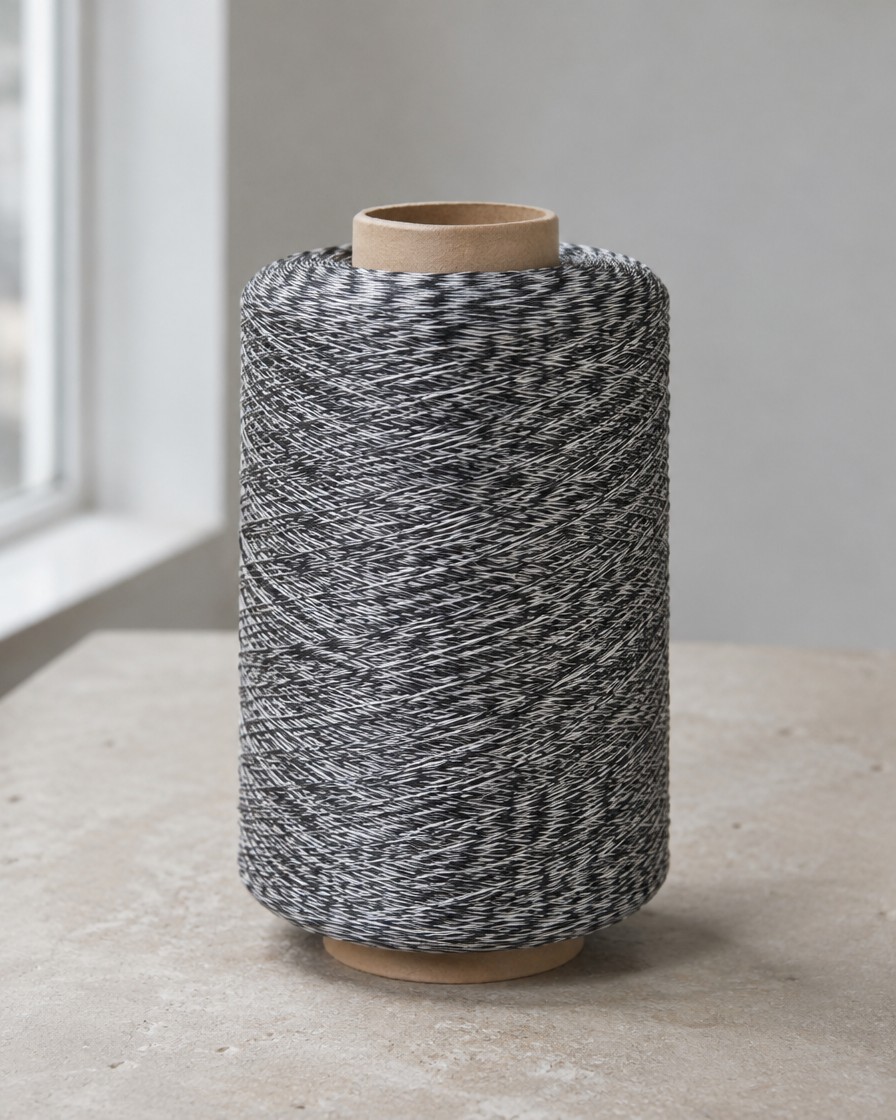
Thermosets such as epoxy are the mature choice for the highest stiffness and heat resistance and are supplied as liquid resin or prepreg. Thermoplastics such as PP, PA and PEEK give shorter forming cycles, room-temperature storage and a path to recycling. The right choice depends on the part, the volume and the service temperature.
| Thermoset | Thermoplastic | |
|---|---|---|
| Forming | Chemical cure | Melt, then cool |
| Cycle time | Longer | Shorter |
| Material storage | Prepreg needs cold storage, limited shelf life | Room temperature |
| Re-forming and welding | No | Yes |
| Recycling | Difficult | Can be remelted |
| Common matrices | Epoxy, polyester, vinyl ester, phenolic | PP, PA6, PA66, PC, PPS, PEEK |
| TEi materials | Prepreg, carbon fiber boards | Comtrix™, MAXPOLY™, CfC™ |
General guidance. The final choice depends on part, volume and service temperature.
From TEi: thermoset prepreg and carbon fiber boards; thermoplastic Comtrix™ commingled yarn, MAXPOLY™ self-reinforced PP and CfC™ chopped carbon.
RTM vs compression molding vs prepreg
Prepreg is a material, not a molding process: fiber pre-impregnated with a measured amount of resin. RTM injects liquid resin into dry fiber in a closed mold; compression molding presses prepreg, molding compound or thermoplastic material between heated matched metal molds.
RTM suits complex 3D shapes with two finished faces at medium volume. Compression molding gives short cycles and two finished faces at high volume, with the highest tooling investment. Prepreg cured under vacuum bag or in an autoclave on a one-sided tool remains the benchmark for large, high-performance structures at low volume. Fiber-filled injection molding covers small, complex, precise parts.
| RTM (resin transfer molding) | Compression molding | Prepreg, vacuum bag or autoclave | Fiber-filled injection molding | |
|---|---|---|---|---|
| Input material | Dry fiber preform and liquid resin | Prepreg, molding compound or thermoplastic material | Prepreg | Short-fiber compound pellets |
| Mold | Closed, matched rigid mold | Heated matched metal mold in a press | One-sided tool and vacuum bag | Precision steel mold |
| Finished faces | Two | Two | One | All |
| Shapes | Complex 3D, inserts | Panels, shells, moderate 3D | Large structures | Small, complex, precise |
| Typical volume | Medium | High | Low | Very high |
| Tooling investment | Medium to high | Highest | Low to medium | High |
General comparison. The crossover between routes depends on part size, complexity and tooling strategy.
From TEi: resin transfer molding, compression molding, prepreg and HIM™ precision injection molding.
Braided sleeves and braid angle
A braided sleeve is a seamless tube of fibers interlaced at ±θ to its axis; the braid angle decides whether the tube is stiffer in bending, in torsion or in the hoop direction.
Low angles align fibers with the axis for bending and axial stiffness; ±45° carries torsion and shear best; high angles resist crushing and internal pressure. A triaxial braid adds 0° fibers along the axis, combining axial stiffness with torsion. Braids conform to tapered and curved mandrels without a seam.
| Braid | Fiber orientation | Strongest contribution |
|---|---|---|
| Biaxial ±30° | Close to the axis | Bending and axial stiffness |
| Biaxial ±45° | Diagonal | Torsion and shear |
| Biaxial ±60° | Close to the hoop | Hoop strength, crush resistance |
| Triaxial 0°/±45° | Axial plus diagonal | Axial stiffness with torsion |
From TEi: biaxial ±30°/±45°/±60° and triaxial 0°/±45° on braided sleeves, braided carbon fiber tubes and triaxial braided fabric.
How to choose, in five questions
Start from the load, then the shape, then the volume: fiber follows the stiffness target, fabric form follows the geometry, and the molding route follows the production volume.
- Load and weight: stiffness-driven and weight-critical → carbon; impact or cut → aramid or a carbon/aramid hybrid; cost or insulation → glass.
- Shape and surface: flat → plain; curved or visible → twill; deep double curvature → satin or braid; defined load paths → UD or NCF.
- Wall thickness and weight: thin-wall or weight-critical → spread tow and thin plies; thick → larger tows.
- Volume and cycle: low → prepreg on a one-sided tool; medium → RTM; high → compression molding or thermoplastic forming; small precise parts → fiber-filled injection.
- Service and end of life: highest heat and stiffness → thermoset; re-forming, welding or recycling → thermoplastic.
Frequently asked questions
Is carbon fiber stronger than steel?
Per unit weight, yes, by a wide margin. Typical standard-modulus carbon fiber has a tensile strength of about 3.5–5.0 GPa at a density near 1.8 g/cm³, while steel is about 0.4–1.5 GPa at 7.8–7.9 g/cm³. A finished laminate is lower than the single-fiber value, and carbon is brittle rather than ductile, so a carbon part is designed differently from a steel one.
Carbon fiber or fiberglass: which should I use?
Use carbon fiber when stiffness and low weight drive the design; its tensile modulus is roughly three times that of E-glass at about 30% lower density. Use fiberglass when cost, electrical insulation or radio transparency matter more. Hybrid fabrics combine the two.
What do 3K, 12K and 24K mean in carbon fiber?
They give the number of filaments in each carbon tow, in thousands: 3K is 3,000 filaments, 12K is 12,000 and 24K is 24,000. Smaller tows weave finer and lighter fabrics; larger tows build thickness faster at a lower cost per kilogram.
Is twill weave stronger than plain weave?
Not by much. Twill has less crimp and is often slightly better in in-plane properties, and it drapes better over curves. Plain weave is more stable to cut and handle. For most parts the choice is driven by shape and appearance rather than strength.
Can carbon fiber composites be recycled?
Thermoset composites are difficult to recycle because the resin cannot be remelted. Thermoplastic composites can be remelted and re-formed, and reclaimed carbon fiber can be reused in chopped or forged-look materials. TEi offers Carbion™ recycled forged carbon, MAXPOLY™ mono-material PP and Comtrix™ thermoplastic commingled yarn.
Who is TEi Composites Corporation?
TEi Composites Corporation is a composite-materials manufacturer founded in 1978 in Xianxi Township, Changhua County, Taiwan. It weaves carbon fiber, fiberglass and aramid in-house and supplies fabrics, spread tow fabric, coloured carbon, commingled yarn, prepreg, braided sleeves and molded parts to customers worldwide.
About this guide
Written by TEi Composites Corporation, a composite-materials manufacturer based in Xianxi Township, Changhua County, Taiwan, since 1978. TEi weaves carbon fiber, fiberglass and aramid in-house and supplies materials and molded parts from fiber to finished part.
General inquiries: teiandttc@teicomposite.com · Project services: tei-service@teicomposite.com · B2B materials: teib2b@teicomposite.com

Not sure which material fits your part?
Send the part's use, target thickness, size and volume. TEi's engineers will suggest the fiber, fabric and process.