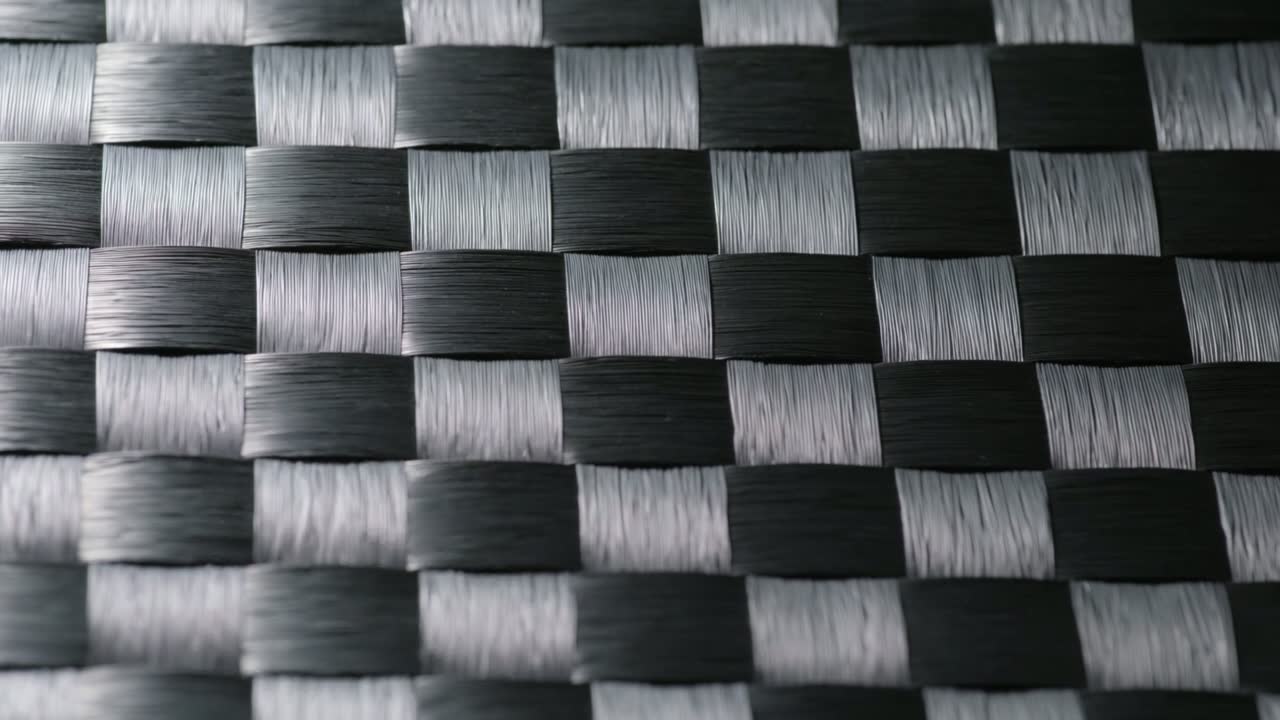
Electrostatic force opens up and flattens a dense carbon fiber tow into a thinner, wider tape with more uniform filament spacing. Flatter fibers at the start mean more uniform, less wasteful weaving, layup and molding downstream.
On the left: a narrow, thick tow with filaments crowded together. In the electrostatic dispersion zone, thousands of filaments are pushed apart and gather on the right into a wider, thinner, more evenly spaced spread tow.
A carbon fiber tow is a bundle of thousands of ultra-fine filaments. A raw tow is narrow and thick, with fibers crowded together and unevenly spaced. Electrostatic dispersion spreading uses electrostatic force to separate the filaments and lay them out evenly, turning a narrow, thick bundle into a wider, thinner tape with more uniform filament spacing.
Every downstream process inherits the fiber arrangement set here. Flat, evenly spaced fibers mean more uniform wet-out, better formability, thinner and lighter parts, and less waste. The resulting wide thin tape is thin-ply / spread tow — the base material for weaving (such as IntenLight™ spread tow carbon fabric) and layup.
The first station. Spreading sets the starting fiber arrangement, which then feeds weaving, prepreg, RTM and compression molding.
Flat, uncrowded fibers make the thin tape drape better and conform to curved surfaces with fewer wrinkles and pile-ups.
Even spacing gives resin a consistent path between filaments, so the wet-out front advances evenly.
The same fibers spread wider and thinner allow thinner plies (thin-ply) — reaching the required performance with less material.
A uniform wide thin tape makes offcuts and overlaps in cutting and layup more controllable, raising material utilization.
TEi is both a material supplier and a composite solutions partner: buy just the spread tape / spread tow fabric, or hand us the whole chain from fiber to finished part.
It uses electrostatic force to open up and flatten a carbon fiber tow made of thousands of filaments, giving more uniform spacing and a wider, thinner bundle. The resulting wide thin tape — thin-ply / spread tow — is the base material for weaving and layup.
A regular tow is narrow and thick, with filaments crowded and unevenly spaced; after spreading it is wider, thinner and evenly spaced. The difference carries all the way downstream — the more uniform the arrangement, the more consistent the wet-out, the better the formability, the thinner and lighter the part, and the less the waste.
Thin-ply refers to fiber layers thinner than conventional plies. By spreading the tow wider and thinner, thinner single plies can be laid — reaching the required performance with less material. Spreading is one of the fundamental processes behind thin-ply materials.
It is the base material for weaving and layup — for example woven into TEi’s IntenLight™ spread tow carbon fabric, or stacked directly as thin plies. Standing at the first station of TEi’s process chain, it feeds into weaving, prepreg, RTM and compression molding.
Two roles: as a material supplier — supplying spread thin tape / thin-ply formats and IntenLight™ spread tow fabric; and as a solutions company — going from the fiber end all the way to finished parts, with one quality system and a single point of contact. Actual specifications are subject to formal test reports.
Compare fibers, weaves and processes in the composite selection guide →
 邁向五十週年TOWARD FIFTY